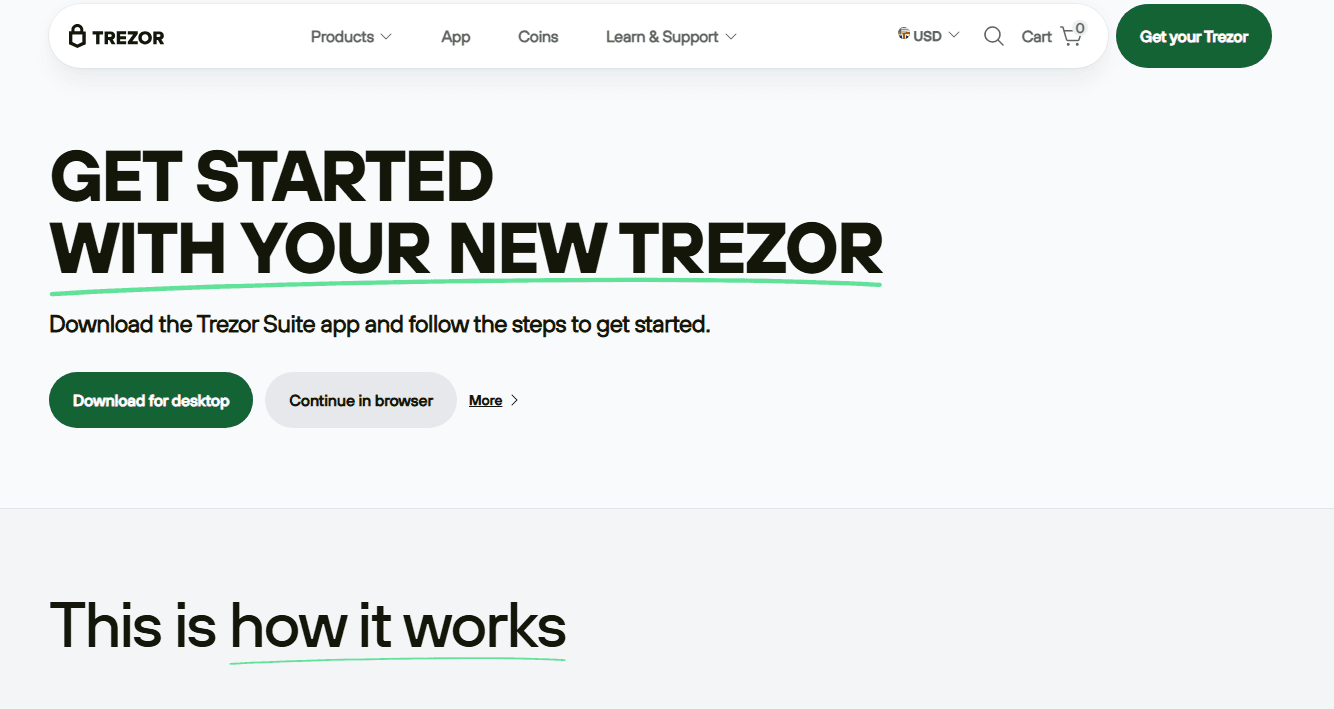
Trezor Suite – A Comprehensive 1200-Word Overview
Trezor Suite is the official software platform created to work with Trezor hardware wallets. While the hardware wallet protects private keys by keeping them offline, Trezor Suite provides the visual interface that allows users to manage accounts, view balances, adjust security settings, and interact with their device in a clear and organized environment. The software is designed with security and usability at the core, helping users understand how to navigate digital assets safely while reinforcing important cybersecurity habits.
Even for people who are simply exploring technology or learning about digital security, Trezor Suite serves as an excellent example of how secure interfaces are built. It blends cryptography, user experience design, and responsible digital management into one platform.
1. What Trezor Suite Is and Why It Exists
Trezor Suite acts as a companion application to the hardware wallet. Its purpose is not to store private keys — that job belongs to the hardware device — but to display information and help users interact with their accounts in a trustworthy way. Because the Suite works directly with a hardware wallet, it creates a secure environment where sensitive actions require physical confirmation on the device itself.
The main goals of Trezor Suite include:
Providing a clear, organized dashboard
Offering tools for managing multiple accounts
Teaching users essential security concepts
Creating a safe interface for reviewing information
Supporting long-term digital asset organization
Through its design, Trezor Suite models what a secure application looks like: transparent, controlled, user-centered, and protective.
2. A Focus on Security From the Ground Up
Security is the foundation of Trezor Suite. Every feature is designed to reinforce the idea that users must remain in full control of their sensitive information. Because the hardware wallet holds the private keys, Trezor Suite focuses on verifying actions, displaying account details, and providing access to security tools without ever handling the keys directly.
Several principles guide Trezor Suite’s design:
A. Local Control
Trezor Suite operates as software that runs on a user’s own device, not as a cloud-based service. This reduces exposure to online risks.
B. Hardware Verification
Every sensitive action is confirmed through the Trezor device itself. Users physically check the screen on the hardware wallet before approving important operations.
C. Transparency
The software is open-source, which means the community can inspect and verify its safety.
D. Privacy Awareness
Trezor Suite provides tools and explanations to help people understand how to minimize sharing sensitive information.
Together, these elements create a space where safety and privacy are prioritized.
3. The Dashboard: A Central Hub
One of the core components of Trezor Suite is its dashboard. This is the home screen where users can see an overview of their accounts, assets, and general activity. The dashboard presents information visually, allowing people to quickly understand what is happening across their digital portfolio without exposing sensitive details.
The dashboard typically includes:
Account listings
Overview charts
Recent activity summaries
Security status indicators
Device connection information
For educational purposes, the dashboard demonstrates how to present data in a way that is clear, organized, and accessible without overwhelming the user. It reflects good design practices in modern software development.
4. Managing Accounts in Trezor Suite
Trezor Suite makes it possible to organize multiple accounts in a structured environment. Each account is displayed separately so that users can understand how different assets or categories are arranged. This helps people learn how digital addresses and account structures work in blockchain ecosystems.
Some organizational features include:
Separate accounts for different purposes
Clear differentiation between assets
Easy visibility of incoming and outgoing activity
Custom naming and labeling options
What makes this especially educational is how it demonstrates the difference between visible account information and the private keys stored securely on the hardware wallet.
5. The Role of the Hardware Wallet Within the Suite
Trezor Suite cannot function securely without the hardware wallet itself. The Suite displays information, but all sensitive operations rely on the physical Trezor device. This partnership between software and hardware teaches several important principles:
A. Separation of Responsibilities
The hardware wallet protects private keys, while the Suite manages information and visualization.
B. Mandatory Physical Confirmation
No sensitive action can be completed without pressing buttons on the physical device.
C. Device Integrity Checks
Trezor Suite communicates with the hardware wallet to verify firmware, authenticity, and connection safety.
D. Reduced Attack Surface
Because the Suite never handles private keys, the risk of remote exposure remains extremely low.
These ideas show how modern security systems rely on layers of protection instead of a single measure.
6. Security Tools and Features Inside Trezor Suite
A major part of Trezor Suite’s purpose is to give people the tools and information they need to maintain strong digital security.
Some key features include:
A. Backup Verification
The Suite helps users confirm that they properly stored their recovery phrase — the critical backup needed if the device is ever lost.
B. PIN and Passphrase Management
While the device handles these features, Trezor Suite helps users understand how they work and how they contribute to overall protection.
C. Firmware Notifications
The software alerts users when new firmware is available and explains why updates matter.
D. Privacy Controls
Users can explore features that reduce exposure of their activity, helping them understand concepts like address reuse and data minimization.
E. Security Alerts
Clear visual indicators notify users if something needs attention.
Learning these tools teaches people how to think critically about cybersecurity and personal data protection.
7. Privacy Awareness Features
Trezor Suite includes privacy-focused tools to help users understand how their activity might appear on blockchain networks. This doesn’t involve hiding identity illegally; rather, it teaches users how to avoid unnecessary information exposure.
Some educational points include:
Why generating new addresses can protect privacy
Why sharing account details publicly can be risky
How public blockchains differ from private databases
Why metadata matters as much as transaction details
These lessons apply to all kinds of digital environments, not just cryptocurrency.
8. Design and User Experience Principles
Another key strength of Trezor Suite is its interface design. The layout is clean, modern, and visually structured to avoid confusion.
The design follows several key principles:
Clear navigation
Easy-to-read typography
Consistent iconography
Well-defined sections
Intuitive organization
From an educational standpoint, this helps users understand what a secure, professionally designed software environment looks like. It also reduces the risk of mistakes by presenting information clearly.
9. Learning Cryptography and Digital Security Through Trezor Suite
Even if someone does not actively manage digital assets, Trezor Suite is a great way to learn about:
How public and private keys work
How hardware wallets secure sensitive information
How accounts are structured in blockchain systems
What recovery systems look like
Why offline storage matters
How verification prevents fraud
How user behavior impacts security
Understanding these fundamentals can help anyone develop stronger digital habits across everyday technology.
10. Trezor Suite as a Model for Safe Digital Behavior
Ultimately, Trezor Suite teaches users how to:
Protect sensitive information
Recognize potential risks
Use verification before taking action
Store backups securely
Maintain awareness of privacy
Avoid relying on untrusted tools
These habits apply far beyond digital assets. They are useful for protecting personal accounts, handling online identity, and navigating modern technology safely.
11. Final Thoughts
Trezor Suite is far more than a portfolio viewer or account manager. It is a complete security environment designed to work hand in hand with Trezor hardware wallets. Through its tools, layout, and educational messages, it teaches fundamental concepts about cybersecurity, privacy, cryptographic safety, and responsible digital management.
Even for those who are simply exploring, Trezor Suite serves as an excellent introduction to how secure systems are designed and how users can interact with sensitive digital information in a safe, structured, and informed way.